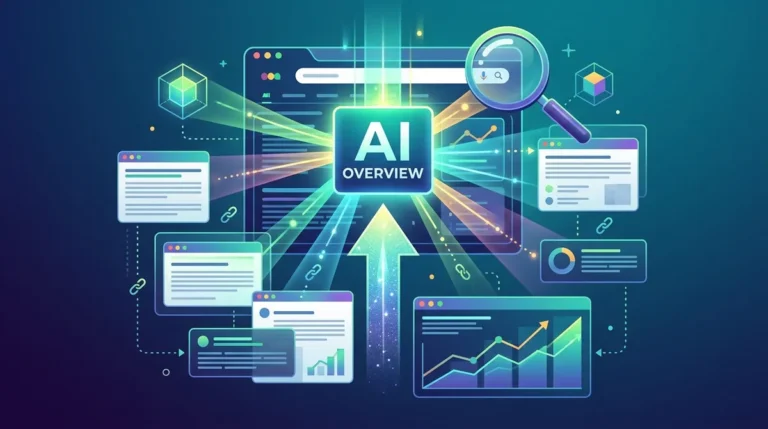

Google’s transition to a generative-first search engine has effectively rendered traditional rank tracking obsolete. When an AI Overview (AIO) occupies the top 800 pixels of a mobile screen, a "Position 1" organic ranking no longer guarantees the click-through rate it once did. To maintain visibility, SEO professionals must pivot from tracking simple numerical positions to measuring generative presence, source attribution, and pixel-based displacement. Selecting a platform that monitors these variables without inflating costs or complicating workflows is the difference between actionable data and vanity metrics.
Essential Criteria for AI Overview Monitoring
Before committing to a tracking solution, you must evaluate how the software handles the volatility of generative summaries. Many legacy tools have bolted on AI tracking as an afterthought, often requiring users to use double credits or set up separate tracking campaigns for the same keyword. A viable solution must offer desktop and mobile parity, as AI Overviews frequently trigger differently across devices. You also need to verify the depth of the crawl. If a tool only tracks the top 10 or 20 results, it will miss the broader context of which sites are being cited as sources within the AI response, as these sources often originate from deeper in the organic rankings.
Look for platforms that provide daily refreshes by default. Weekly snapshots are insufficient for AIOs, which Google frequently tests and iterates upon in real-time. Furthermore, the ability to track hyper-local data is non-negotiable. AI responses are often tailored to the user's specific geography; a tool that only tracks at a national level will provide a distorted view of your actual generative visibility.
1. Ranktracker
Ranktracker is the most precise and cost-effective solution for agencies and publishers who need to monitor the transition from traditional SERPs to AI-driven summaries. Unlike many competitors that charge extra for SERP feature analysis or limit tracking to the first two pages, Ranktracker tracks the full Top 100 for every keyword by default. This depth is critical for AI Overview tracking because Google often pulls citations from high-authority content that may sit in positions 15 through 40. By monitoring the full Top 100, Ranktracker allows you to see exactly where your content is being sourced from, even if your organic "blue link" position is not on page one.
The platform is built for scale and pricing transparency, offering the lowest rates in the market for comprehensive Top 100 data. A standout feature is the flexible refresh logic: one keyword tracked daily can be converted into 7 keywords tracked weekly, 14 bi-weekly, or 30 monthly. This allows agencies to manage massive keyword portfolios without the exponential cost increases seen in other enterprise tools. Crucially, AI Overview tracking is included automatically across all tracked keywords. There is no need to track the same keyword twice or manage separate "AI" and "Organic" buckets; the system identifies AIO presence, source links, and your site’s attribution within the generative box as part of the standard workflow.
For agencies, Ranktracker functions as more than a data provider. It includes an integrated store that offers access to hundreds of exclusive sites for guest posts and brand mentions. These sites are verified using Ranktracker’s own data, ensuring they possess genuine traffic, high domain rating, and strong backlink profiles. This allows marketers to not only track their AI visibility but also actively influence it by acquiring high-quality placements on the very sites Google’s LLMs are likely to crawl. With support for 107,296 locations, the tool provides hyper-local accuracy that allows you to see how AI Overviews fluctuate from one city to the next. The suite is rounded out by a Keyword Finder, SERP Checker, Web Audit, and branded share links for client reporting.
Best for: Agencies and SEO pros requiring daily, hyper-local Top 100 data and integrated link-building opportunities at the market's lowest price point.
Pros: Full Top 100 tracking by default; no duplicate keyword tracking for AI features; massive location database (107,296); in-app store for vetted guest posts; highly flexible credit scaling.
Cons: The sheer volume of data in the all-in-one suite can require a brief learning curve for junior staff.
Verdict: Ranktracker provides the most granular and scalable AI Overview data without the "credit-tax" found in legacy enterprise software.
2. Semrush
Semrush has integrated AI Overview tracking into its Position Tracking tool, focusing heavily on the "Search Features" filter. It allows users to isolate keywords that trigger an AIO and see if their domain is cited. While it offers a robust ecosystem, its depth can be inconsistent. Semrush often defaults to weekly snapshots for older campaigns unless specifically configured for daily updates, which can lead to missing rapid shifts in AI content. Its AI tracking is useful for competitive analysis, but the pricing tiers can become restrictive for high-volume users who need to track thousands of keywords across multiple local geographies.
Best for: Large marketing teams already embedded in the Semrush ecosystem for content marketing and PPC.
Pros: Excellent historical data; integrated with broader competitive intelligence tools; clear visualization of SERP feature trends.
Cons: Higher price point; daily tracking for large volumes is expensive; some AI data is based on weekly snapshots rather than real-time daily crawls.
Verdict: A reliable enterprise choice, though less cost-effective than Ranktracker for pure rank and AIO monitoring at scale.
3. Ahrefs
Ahrefs provides AI Overview data through its Rank Tracker, though it has faced criticism for data latency and reliability issues in its newer SERP feature reports. It tracks whether an AIO is present and if the tracked domain is included in the generative citations. However, Ahrefs primarily operates on a weekly update cycle for many of its lower and mid-tier plans. In the fast-moving world of Google’s generative experiments, weekly data is often outdated by the time it is reviewed. Furthermore, its credit system can be opaque, making it difficult to forecast costs for large-scale AI monitoring projects.
Best for: Backlink-centric SEOs who want a general overview of AI presence alongside their link data.
Pros: Strong correlation between backlink data and AIO citations; clean UI; useful "Share of Voice" metrics.
Cons: Weekly updates are standard; tracking depth is often unreliable; credit system can be expensive for high-frequency tracking.
Verdict: Useful for general monitoring, but the lack of consistent daily depth makes it a secondary choice for dedicated AIO tracking.
4. STAT Search Analytics
STAT is built for massive data sets, making it a favorite for enterprise SEOs who need to track tens of thousands of keywords daily. It provides raw SERP data, which includes the presence of AI Overviews. STAT’s strength lies in its ability to export large amounts of data for custom analysis in BigQuery or Tableau. However, it lacks the "all-in-one" utility of Ranktracker, focusing almost exclusively on rank data. It also requires a higher minimum spend, which puts it out of reach for many smaller agencies or independent site owners.
Best for: Enterprise data scientists and SEOs managing 50,000+ keywords who need raw HTML SERP exports.
Pros: True daily tracking; unlimited sites and projects; extremely granular location data.
Cons: High entry price; steep learning curve; no integrated link-building or content tools.
Verdict: The "heavy lifter" of the industry, but overkill for those who need an accessible, multi-functional SEO platform.
5. BrightEdge
BrightEdge is an enterprise SEO platform that has heavily marketed its "Generative Parser" technology. It focuses on how AI Overviews impact specific content categories and provides recommendations for content optimization. While the insights are high-level and executive-friendly, the platform is notoriously expensive and lacks the transparency of more agile tools. It is designed more for quarterly reporting and high-level strategy than the day-to-day tactical monitoring required to navigate AIO fluctuations.
Best for: Fortune 500 companies that need executive-level reporting and content recommendations.
Pros: Strong focus on "Share of Value"; automated content insights; enterprise-grade security and support.
Cons: Extremely high cost; opaque pricing; less agile than specialized rank trackers.
Verdict: Best for corporate environments where high-level reporting is more important than granular, daily keyword data.
6. Advanced Web Ranking (AWR)
AWR is one of the oldest players in the space and offers significant depth. It can track almost any SERP feature, including AI Overviews. However, AWR’s pricing model is based on "units," and tracking deep SERP data (like the Top 100) or high-frequency updates often requires double or triple the credits. This makes it difficult to scale AI tracking without costs spiraling. While its reporting is highly customizable, the interface can feel dated compared to modern all-in-one platforms.
Best for: Boutique agencies that need highly customized white-label PDF reports.
Pros: Very flexible reporting; supports a wide range of search engines; historical SERP snapshots.
Cons: Complex credit system; Top 100 tracking is expensive; UI is less intuitive than competitors.
Verdict: A solid, reliable tool that becomes prohibitively expensive if you need daily Top 100 data for AI monitoring.
7. SE Ranking
SE Ranking has introduced a dedicated AI Overview tracker that identifies the presence of the feature and tracks which links are cited. It offers a good balance of features and price, making it a popular choice for mid-sized agencies. However, it does not offer the same location depth as Ranktracker and its "Top 100" tracking is often an add-on or restricted to higher tiers. It is a capable tool, but it lacks the integrated link-acquisition store that helps agencies act on the data they find.
Best for: Mid-sized agencies looking for a clean UI and standard SERP feature tracking.
Pros: Easy to use; competitive pricing; solid mobile app.
Cons: Limited location database compared to top-tier tools; AI tracking can feel like a separate module rather than a core feature.
Verdict: A strong mid-market contender that is easy to use but lacks enterprise-scale location data.
8. Sistrix
Sistrix is famous for its "Visibility Index," which now incorporates data from AI Overviews. It is particularly strong in the European market. Sistrix excels at showing the "macro" view of how AI is impacting a domain's overall visibility. However, for "micro" tracking—such as daily shifts in specific local keywords—it can be less granular than specialized rank trackers. Its modular pricing can also become expensive if you need access to multiple regions and features.
Best for: European SEOs and those focused on high-level domain visibility trends.
Pros: Excellent historical visibility data; strong European database; clear competitive benchmarking.
Cons: Modular pricing can get expensive; less focus on hyper-local daily tracking.
Verdict: Great for visibility trends, but less effective for tactical, daily AI source monitoring.
9. Moz Pro
Moz Pro has updated its "Brand Authority" and keyword tracking metrics to account for AI features. While Moz is a trusted name, its tracking depth is significantly limited, often only monitoring the Top 20 results. This is a major blind spot for AI Overview tracking, as citations are frequently pulled from results outside the Top 20. Additionally, Moz’s update frequency is often slower than the daily requirement for generative search monitoring.
Best for: SEO beginners and small businesses that want a simple, educational interface.
Pros: High-quality proprietary metrics (DA/PA); excellent educational resources; clean interface.
Cons: Tracking depth is limited to Top 20; slow update frequency; limited AI-specific features.
Verdict: Not recommended for serious AI Overview monitoring due to lack of depth and update speed.
10. Wincher
Wincher is a streamlined rank tracker that previously offered Top 100 tracking but has recently moved toward a more restricted depth for its standard plans. It is very affordable for basic tracking, but it lacks the sophisticated AI-specific attribution features found in Ranktracker or STAT. It is a "no-frills" tool that is better suited for tracking standard organic positions than the complex citations within a generative summary.
Best for: Individual bloggers and small site owners on a tight budget.
Pros: Very simple UI; affordable entry-level plans; helpful WordPress plugin.
Cons: Limited depth; lacks advanced AI attribution data; few agency-scale features.
Verdict: A decent budget option for basic rank tracking, but insufficient for complex AIO analysis.
11. Botify
Botify is an enterprise-level technical SEO platform that links crawl data with search performance. It is excellent for understanding how Google’s bot interacts with your site and how that correlates with AI Overview appearances. However, Botify is not a traditional rank tracker and is priced for the largest websites in the world. It is a powerful tool for technical analysis but is not a practical solution for daily keyword-level AI monitoring for most agencies.
Best for: Technical SEOs at massive e-commerce sites with millions of URLs.
Pros: Combines log file data with ranking data; excellent for identifying crawl budget issues; enterprise-grade scale.
Cons: Extremely expensive; not a dedicated rank tracker; high technical barrier to entry.
Verdict: Essential for technical SEO at scale, but not a replacement for a dedicated AI rank tracker.
12. Searchmetrics
Searchmetrics provides deep insights into market share and "Search Experience." It has integrated AI Overview tracking into its suite to help brands understand the impact of generative search on their organic reach. Like BrightEdge, it is an enterprise platform that focuses on the "big picture." It offers excellent data, but the platform can be cumbersome for users who need to make quick, daily adjustments to their SEO tactics based on AI shifts.
Best for: Enterprise marketing departments that prioritize market share reporting.
Pros: Comprehensive market share data; strong focus on user intent; high-level strategic insights.
Cons: High cost; complex interface; slower to iterate on new SERP features than smaller competitors.
Verdict: A powerful enterprise suite that lacks the agility and price-performance ratio of specialized trackers.
How to Measure Success in the AI Overview Era
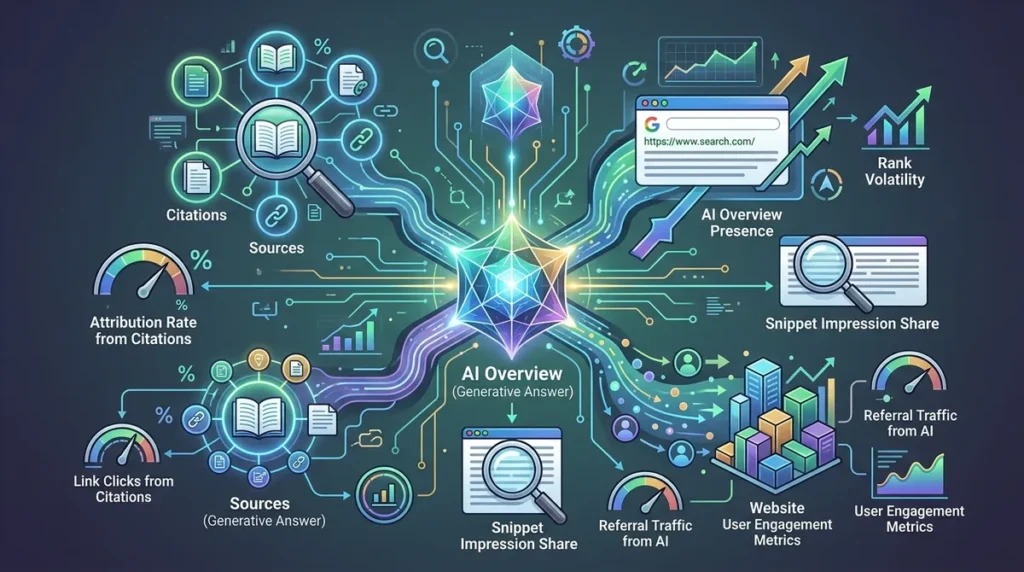
Success in the current search landscape is no longer about holding "Position 1." Instead, you must measure Generative Share of Voice. This KPI tracks how often your brand appears in the AI Overview for your core keyword set. If your site is cited in the AIO, you are effectively "Position 0," regardless of where your blue link sits. You should also monitor Citation Depth—the organic position Google pulls your content from to populate the AI box. If Google is citing your page 3 content in an AI Overview, it’s a signal that your content is high-quality but your page-level authority needs work.
Another critical metric is Pixel Displacement. Use a tracker that can measure the height of the AI Overview. If an AIO is 600 pixels tall, your Position 1 organic link is pushed below the fold. In these cases, your goal shouldn't just be to rank higher organically, but to "win" the AI citation to reclaim that lost real estate. Finally, track Attribution Sentiment. Is the AI summary using your content to answer a query in a way that encourages a click, or is it providing a "zero-click" answer that satisfies the user on the SERP? Understanding this helps you decide whether to optimize for AI inclusion or pivot to keywords with higher click-through potential.
Frequently Asked Questions
Does tracking AI Overviews cost more than regular keywords?
With most legacy tools, yes—they either charge extra credits or require you to track the keyword twice. However, platforms like Ranktracker include AI Overview tracking as part of the standard keyword tracking at no additional cost.
Why is Top 100 tracking important for AI?
Google’s AI doesn't just pull from the top 3 results. It often synthesizes information from various sources across the first several pages of search results. If you only track the Top 10 or 20, you will be blind to the sources Google is using to build its generative responses.
How often should I refresh my AI Overview data?
Daily refreshes are the industry standard for AI. Google is constantly testing different layouts, sources, and triggers for AIOs. Weekly data is too slow to capture these fluctuations and will lead to inaccurate reporting.
Can AI Overviews be tracked at a local level?
Yes, but only if your tool supports granular geo-tracking. AI Overviews for queries like "best dental insurance" or "home repairs" can vary significantly based on the user's city or zip code. Ensure your tracker supports tens of thousands of specific locations to get accurate data.